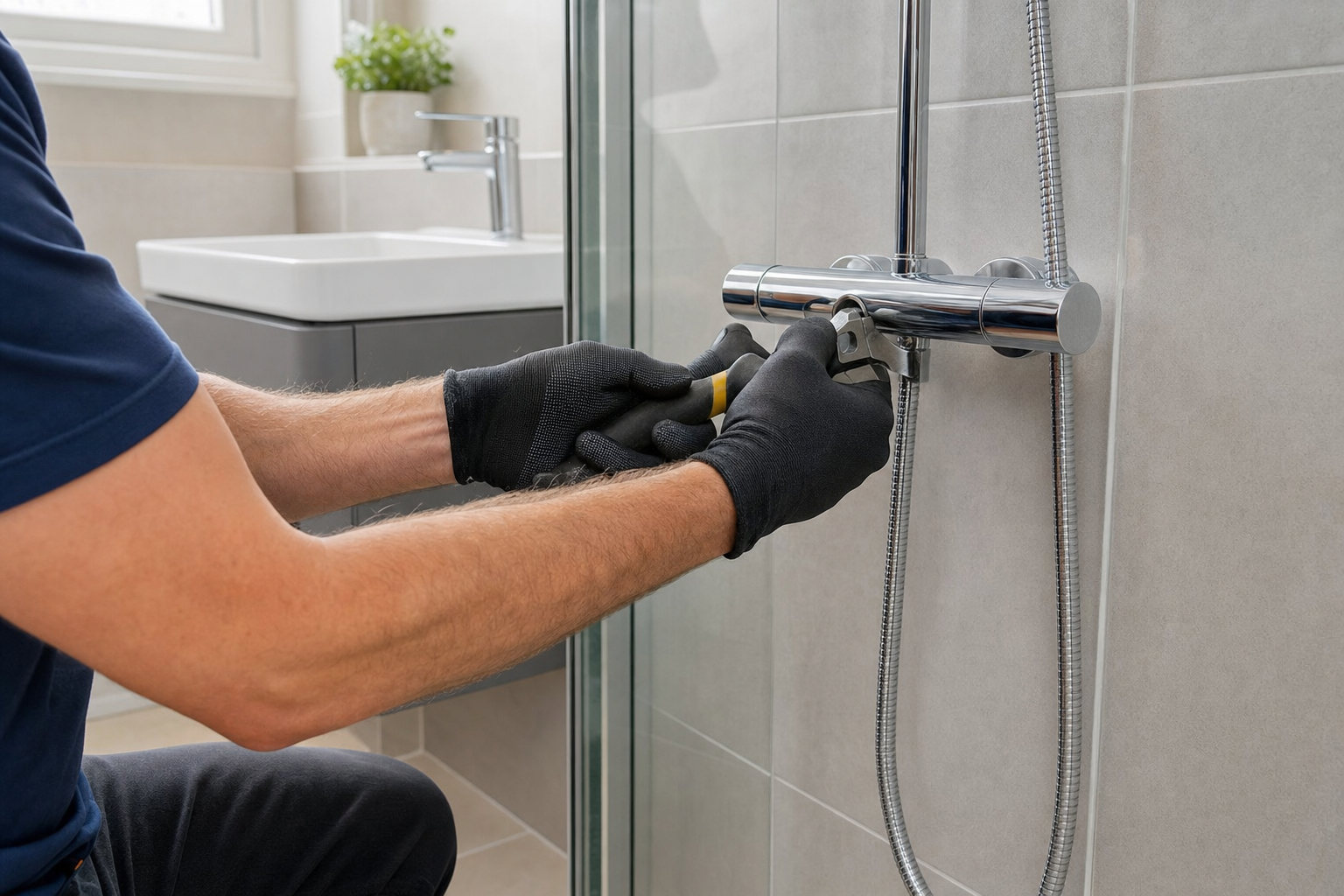
If you need bathroom plumbing West Ealing, Flow Flex Engineers can help with the practical side of repairs, replacements and installations across homes, flats and rental properties. Bathroom plumbing covers the working parts behind everyday fixtures: the shower, bath waste, basin traps, taps, shower pumps, towel rails and the pipework that feeds them. When one part starts leaking, losing pressure or draining slowly, the problem often shows up in another part of the bathroom too.
This page is for customers who want a clear explanation of what may be wrong, what can safely be checked, and what should not be attempted as a DIY fix. That matters because bathroom faults can spread water into floors, ceilings, boxing or units before the source is obvious. In local properties around West Ealing Station, Drayton Green Station, Ealing Broadway, Pitshanger Lane and Walpole Park, we often see issues that begin as a small drip or a weak shower and then turn into a larger repair if left too long.
Flow Flex Engineers provides bathroom plumbing support alongside related services including plumber call-outs, emergency plumbing, boiler repairs, boiler installations, central heating, underfloor heating, gas engineers and water leaks. For bathroom work, the focus is on finding the fault, isolating the affected part where needed, and carrying out a sensible repair or installation that suits the property and the fixture.
Common bathroom plumbing problems include leaking showers, tap faults, blocked baths, toilet repairs and shower pump faults. Some are obvious. Others only show up when a fixture is used in a certain way, such as a shower leaking behind tiles, a mixer tap dripping from the spout, or a bath draining slowly because the waste or trap is partially blocked.
Call 020 3633 6488 or request a visit today. You can also email info@emergency-plumbers-west-ealing.co.uk.
Power Shower Repairs and Installations in West Ealing
Power showers are often chosen where a stronger flow is wanted from a bathroom, but they rely on the right combination of water supply, pressure, valves, electrical supply and pipework. If any of those parts are underperforming, the shower may become noisy, inconsistent, weak or prone to temperature swings. A fault does not always mean the shower itself has failed. In many cases, the issue is in the supply, the pump, the isolation valve, the electrics or the connections behind the unit.
Typical symptoms include poor spray, pulsing water, sudden changes from hot to cold, tripping electrics, unusual vibration or water staining around the shower enclosure. In some homes, the shower works when first switched on but then slows or overheats. In others, the unit fills the bathroom with noise because the pump is struggling or a connection is partially restricted.
What customers should not DIY: avoid opening the shower casing unless you are competent to work safely with electrics and plumbing together. Do not keep resetting a shower that is tripping repeatedly. Do not use sealant as a substitute for a failed internal joint or cracked fitting. A temporary seal can hide the source of a leak while water keeps reaching the wall or floor.
For power shower repairs and installations, the usual approach is to inspect the visible symptoms first, then check the water feed, waste outlet, isolation points and surrounding pipework. If a replacement is needed, the new unit should be matched to the property’s supply conditions so the result is usable rather than just fitted.
Bathtub Installations in West Ealing
Bathtub installations are not just about placing a new bath in position. The waste, overflow, trap, supply routing, sealing, support and access all matter. A bath that is not properly levelled can hold water at one end, strain the waste connection or create movement that damages seals over time. In bathrooms where the bath sits close to a wall, careful finishing is important so that water does not track behind the edge.
Customers usually contact us about a new bath, a replacement after damage, or a bath that has become awkward to use because of leaks around the waste or cracks in the surrounding seal. In some cases, the bath itself is sound, but the fittings beneath it are not. A loose or deteriorated waste joint can drip slowly for weeks before it is noticed, especially if the bath is enclosed or panelled.
What customers should not DIY: avoid relying on surface sealant alone if the bath waste or overflow is leaking. Do not force a bath panel off if there is hidden pipework behind it and you are unsure what is connected. Do not ignore soft flooring, swollen boxing or a musty smell near the bath area, because those are signs that water may already be getting where it should not.
For bathtub installations in West Ealing, the practical objective is a bath that drains correctly, seals properly and can be maintained later without unnecessary disruption. If the old bath has hidden damage beneath it, that is usually identified before the new installation is completed.
Wash Basin Installations in West Ealing
Wash basin installations seem straightforward, but the basin, tap set, waste, trap and pipe connections all need to work together. A basin that looks fine from above can still leak below the counter because of a loose compression joint, a poorly aligned waste or a trap that has not seated correctly. In vanity units, leaks can be hidden until the cabinet base starts to swell or the smell of stagnant water appears.
We help with new basin fitting, replacement basins and situations where the basin area is being updated as part of a wider bathroom refit. If a customer reports slow drainage, an odour from the waste or water appearing beneath the unit, the issue may be as simple as a partial blockage, or it may point to a failing seal or cracked fitting.
What customers should not DIY: do not overtighten plastic waste connections, as this can distort washers or crack fittings. Avoid using excessive force on old chrome pipework or brittle plastic parts. If the basin is wall-mounted, do not assume the fixings are sound just because the basin has not yet moved; hidden looseness can worsen when the basin is loaded with water or pressure is applied during cleaning.
Wash basin installations in West Ealing are best handled with attention to the pipework below the fixture as well as the visible finish above it. That is especially important in smaller bathrooms where a leak can quickly affect flooring or adjoining units.
Mixer Tap Repairs and Replacements in West Ealing
Mixer taps combine hot and cold supplies, so a fault may come from the cartridge, washers, aerator, flexi tails or the isolation valves beneath the basin or bath. Common symptoms include dripping from the spout, a stiff handle, uneven temperature control, low flow or a tap that seems to rattle when opened. In some cases, the tap body is fine but internal parts have worn out. In others, the tap is no longer economical to repair and replacement is the better option.
We work on mixer tap repairs and replacements where the aim is to restore reliable use without creating a bigger problem underneath the sink or bath. A tap that has been forced for months can damage the surrounding fittings, especially if the isolation valve has also seized. Where appropriate, the whole tap set can be replaced so the customer is not left with one repaired part and another weak point nearby.
What customers should not DIY: do not keep turning a stiff tap handle harder, because that can worsen cartridge wear or snap a handle spindle. Avoid replacing washers in modern mixer taps unless you know the specific model and part type. Do not ignore a drip under the sink, because a small leak at a tap tail can spread into the cabinet base and flooring.
For homes and flats in West Ealing, a good tap repair is one that restores control, reduces waste and leaves the surrounding area dry and accessible for future maintenance.
Electric Shower Repairs and Installations in West Ealing
Electric showers need careful handling because they combine water and electrical components. If the unit is not heating properly, cutting out, leaking or delivering inconsistent temperature, the cause may be within the shower itself, the water supply, the electrical connection or the controls. A customer may notice that the shower works for a short period and then becomes cold, or that the water pressure changes after another tap is used elsewhere in the property.
Electric shower repairs and installations often involve checking whether the existing unit is suitable for the supply and the bathroom layout. A replacement should not be treated as a simple like-for-like swap without considering the condition of the pipework, cable route and mounting area. In older bathrooms, previous alterations can leave weak points hidden behind the unit or tiles.
What customers should not DIY: do not open or wire an electric shower unless you are properly qualified to do so. Do not keep using a shower that is tripping the electrics, showing scorch marks or leaking near the casing. Do not attempt to patch a cracked housing with adhesive or tape; if water is reaching electrical parts, the problem needs proper diagnosis.
For households near Ealing Broadway, West Ealing Station and surrounding streets, electric shower work is handled with a focus on safe isolation, practical fault-finding and a finish that is suitable for regular daily use.
Towel Rail Repairs and Installations in West Ealing
Towel rails can be part of the heating system or a standalone heated rail arrangement, and the fault pattern depends on the type installed. A rail may feel partly cold, develop a leak at the valve, show corrosion at the joints or fail to heat evenly. Some problems are caused by air in the system or a valve issue, while others point to wear in the rail itself or poor earlier installation.
We carry out towel rail repairs and installations where the aim is to stop leaks, restore heat output and make sure the unit is properly connected. In a bathroom, even a small drip from a rail valve can run down pipework and collect in an awkward place, so it is worth checking early rather than waiting for visible damage.
What customers should not DIY: do not remove a heated towel rail without isolating and understanding the system type first. Avoid tightening valves excessively if they are already corroded, as that can worsen the leak or damage the fitting. If the rail is part of the heating circuit, do not assume it is safe to disconnect just because it is small.
Towel rail work is often carried out alongside wider bathroom plumbing or heating support, especially where the bathroom has other signs of age or previous alterations.
Shower Pump Installations and Replacement in West Ealing
Shower pumps are used to improve flow where the supply needs help, but they have to be matched to the system correctly. A pump that is undersized, incorrectly positioned or connected to a problematic supply can be noisy, inefficient or short-lived. Symptoms of pump trouble include a humming sound without good flow, vibration through the floor, intermittent pressure, air in the line or leaks around the pump body and joints.
Shower pump installations and replacement work usually starts with understanding why the pump is needed and whether the existing arrangement is suitable. If the pump has failed, the surrounding pipework, valves and water feed should be checked too. Replacing the pump without checking the rest of the system can leave the new unit exposed to the same fault that damaged the old one.
What customers should not DIY: do not run a pump continuously if it is making unusual noise or drawing air. Do not move a pump into a cramped cupboard without considering access, ventilation and serviceability. Do not treat a leak around a pump as minor, because a dribble can become a much larger issue once the unit is running under load.
We can advise on whether a pump replacement is the right fix, and whether the shower, bath or basin area needs related plumbing attention at the same time.
What bathroom plumbing customers in West Ealing should check first
Before a visit, there are a few safe checks that can help narrow down the issue. Look for visible drips under the basin, bath or shower tray. Check whether the fault happens all the time or only when a certain fixture is used. Note whether the water is escaping from a joint, a waste, a valve, a tap body or the shower area. If a leak is affecting flooring or a ceiling below, stop using the affected fixture until it has been assessed.
Do not remove sealed panels, force stuck fittings or carry out electrical work if the shower or pump is involved. If the problem is a blocked bath or slow drain, avoid repeated chemical drain cleaners, as these can make later repairs harder and may not solve the actual cause. If you are a landlord or tenant, it helps to record where the water is appearing and when it started, as that can speed up diagnosis.
Recent local work has included a bathroom plumbing enquiry in West Ealing where the focus was on typical diagnosis, safe checks and practical next steps; a leak beneath kitchen units in Pitshanger where the waste and supply connections were inspected and a failed joint replaced; and a leaking radiator valve in Perivale where the valve area was isolated and the joint tightened before repair options were explained. These examples show the sort of methodical, problem-led approach used on local jobs.
Local bathroom plumbing support for homeowners, landlords, tenants and bathroom fitters
Bathroom plumbing needs vary depending on the customer type. Homeowners often want a long-term repair or a clean installation that fits the room. Landlords usually need a practical fix that protects the property and keeps the bathroom serviceable. Tenants may need help identifying whether the issue is a leak, blockage or failed fitting before it causes more damage. Bathroom fitters may need a plumbing partner who can handle the wet-side work sensibly and keep the project moving.
That is why Flow Flex Engineers focuses on service-specific support and clear customer advice. The aim is not to overcomplicate the job, but to identify the component that is actually causing the fault and deal with it properly. In many bathrooms, the problem is not the most visible part. It may be a trap, a valve, a connection, a pump or a hidden leak behind the fixture.
If you need bathroom plumbing in West Ealing or nearby areas, call 020 3633 6488 to discuss the issue and arrange a visit. Flow Flex Engineers is available 24 hours for urgent plumbing needs, and we also support related plumbing, heating and leak repair work across the local area.